

Digitalisation
Technology
Information
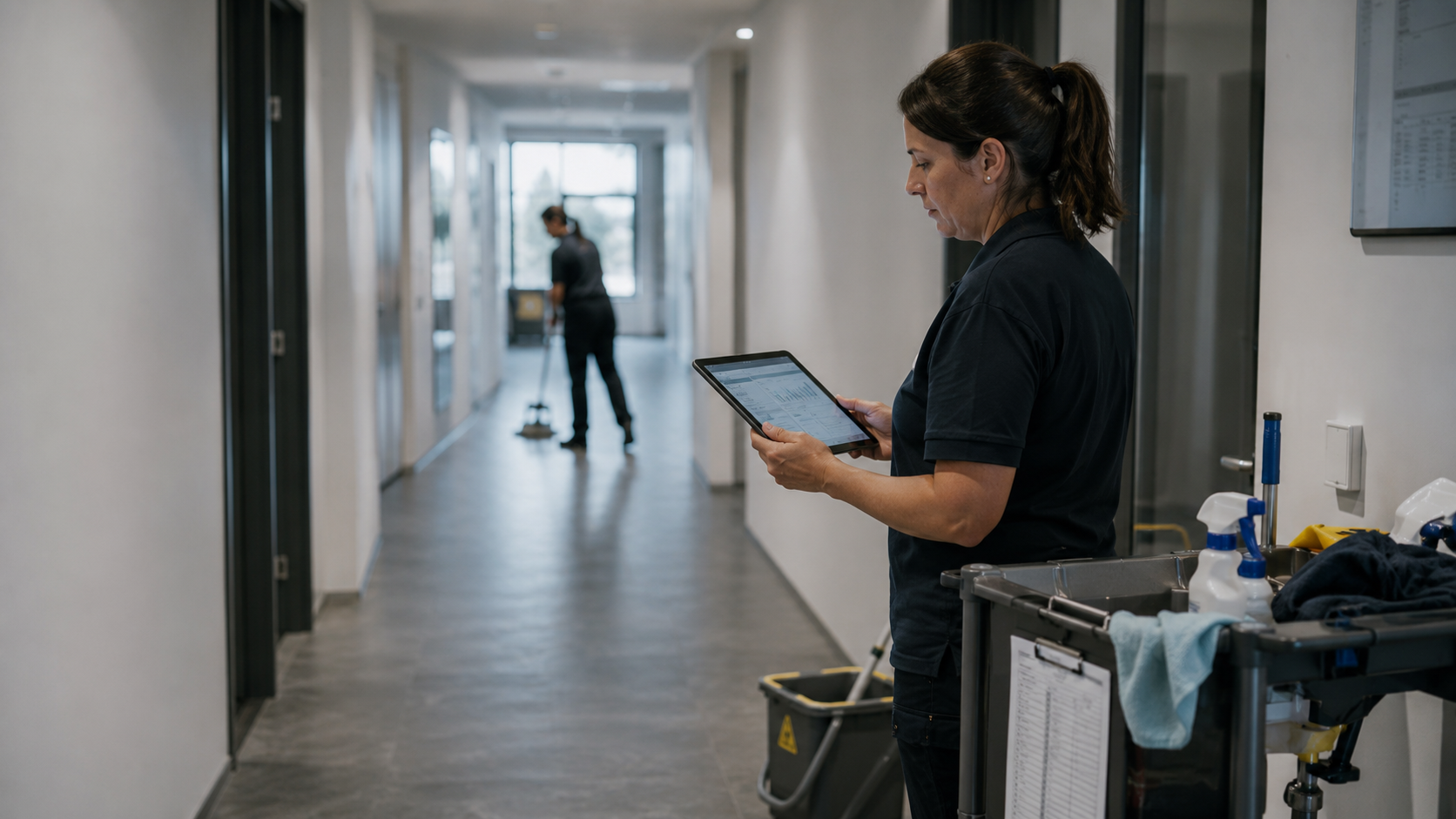

All images in this article were generated using the AI tool ChatGPT.
Do your cleaners often spend 30 extra minutes at the same client every week? Do you receive repeated complaints about the same area? Do supplies keep running out at one specific location? Or do substitute cleaners consistently take longer than your regular staff?
In cleaning operations, problems rarely appear out of nowhere. They build up slowly through small, recurring deviations that are easy to miss in a busy working day. A few extra minutes here, a complaint there, a missing product, or a task that takes longer than planned may not seem serious on its own. Repeated often enough, however, these issues can become expensive.
The good news is that these patterns usually leave a trail. With the right tools, cleaning companies can spot that trail early, before it turns into lost margin, unhappy clients, or burnt-out staff.
Small deviations in cleaning operations often seem harmless at first, but repeated over time they can affect margins, planning, service quality, and client satisfaction.
By combining the following in one system, cleaning companies can spot recurring patterns earlier and act before small issues become costly problems:
In a cleaning company, small gaps can have a bigger impact than they first appear to.
That’s time the company didn’t plan for, price into the agreement, or allocate staff to cover.
And time is only part of the problem. Repeated complaints may point to unclear instructions or a mismatch between the contract and what the client expects. Regular overtime may suggest unrealistic planning. Missing supplies can affect both efficiency and quality.
These patterns don’t always mean that an employee is underperforming. Often, the real issue is found in the system around the work: the plan, the instructions, the communication, the materials, or the agreement itself. That’s why cleaning companies need to look beyond single incidents and pay attention to what keeps repeating.
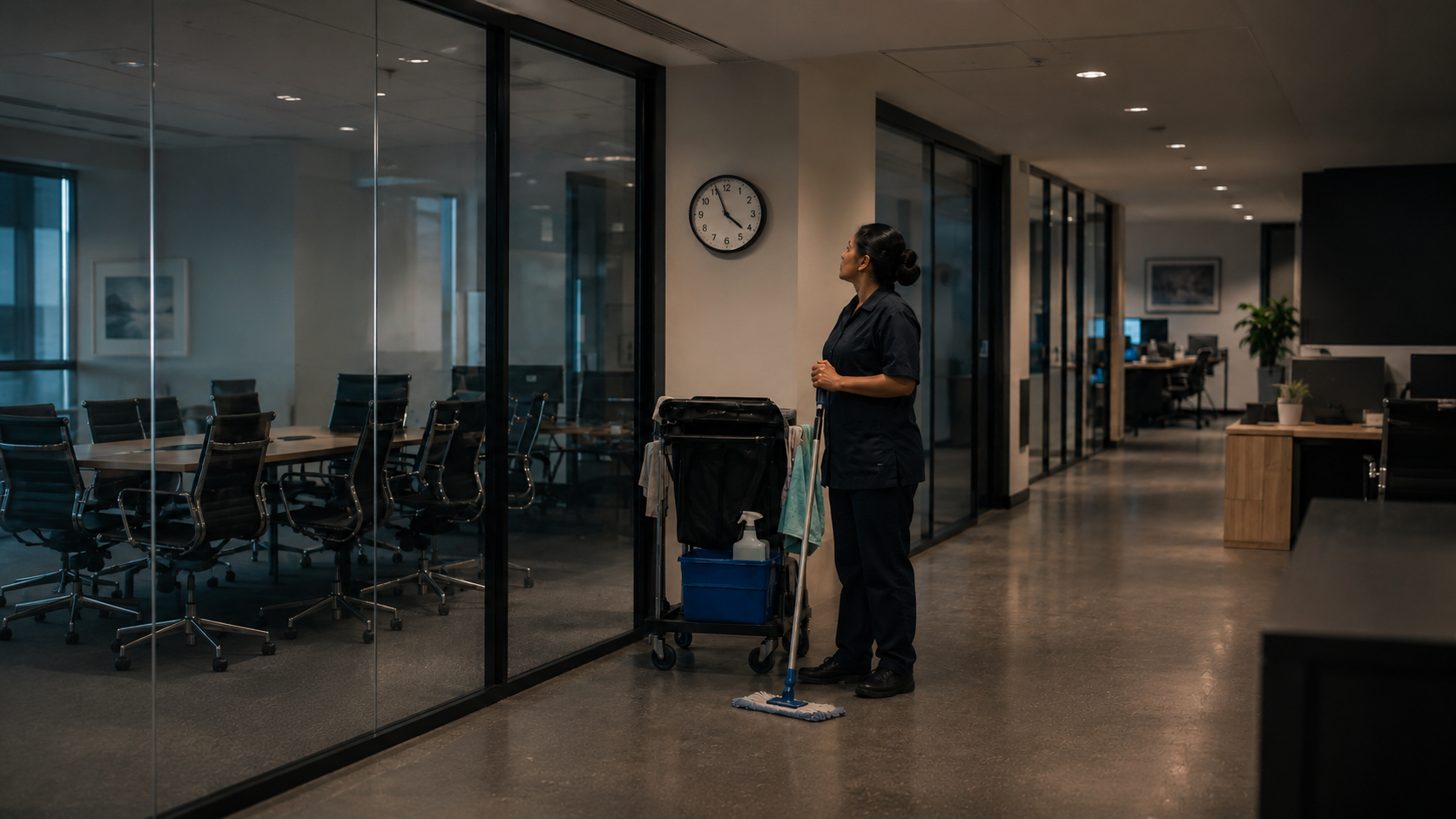
If a cleaner often spends extra time at the same location on the same weekday, it may be easy to assume that the employee is simply working too slowly. But the real cause may be something else.
It could mean that there’s more activity than expected on that day, more tasks than the contract covers, delays with access or keys, or a client quietly expecting extras that were never agreed.
The question isn’t “Why is this employee slow?” but “What’s different about this site, this day, or this task?”
Finishing early sounds efficient, and sometimes it is. But it can also mean tasks are being skipped, the client’s needs have changed, or the original plan allocates too much time. This is why time data should not stand alone.
If all tasks are completed and quality remains high, the plan may need to be adjusted. If complaints or quality issues appear at the same time, the company may need to review how the work is being carried out. The goal isn’t to judge too quickly, but to understand whether the plan still matches the reality of the work.
Every cleaning company receives occasional complaints. But when the same client complains repeatedly, it’s worth looking for a pattern.
Is the complaint always about the same area? Does it happen after certain employees have been on site? Does it happen when a substitute cleaner has covered the task? Or does the client expect a higher service level than what has been agreed?
When complaints are documented and compared with plans, tasks and employee feedback, they become more than frustration. They become useful information.
Running out of supplies can quickly affect both cleaning quality and efficiency. If staff don’t have the right materials, they may lose time, improvise, or be unable to complete the task properly. If this happens repeatedly at the same location, it may indicate a deeper issue.
Perhaps consumption is higher than expected. Maybe stock isn’t being replenished in time. Employees may not be reporting low stock early enough. Or the client’s needs may have changed since the original plan was created.
By using these tools together, cleaning companies can reduce last-minute problems and make sure employees have what they need before they arrive on site.
Many cleaning companies rely on substitute cleaners during illness, holidays or busy periods. But if substitutes often take longer or lead to more complaints, it may reveal that important knowledge isn’t documented clearly enough.
The regular cleaner knows the site very well. They know which door to use, where the supplies are stored, which areas need extra attention, and what the client is particular about. But if that knowledge only exists in one person’s head, the company becomes vulnerable.
When this information is available digitally, it becomes easier for any relevant employee to understand the task and deliver a consistent service. This also protects the company’s quality, reputation and client relationships.
To learn more, read Enhancing Efficiency Through Digitalisation in the Cleaning Industry.
Most cleaning companies already have the information they need to spot these patterns. The problem is that it’s often scattered. Schedules may be in one place, time logs in another, complaints in emails, cleaning plans on paper, and supply issues mentioned only verbally. When information is spread out like this, patterns stay hidden.
CleanManager helps bring daily operations together in one system. Managers can compare schedules, time tracking, cleaning plans, quality control, photo documentation, client details, stock management, and payroll data, instead of trying to piece together the full picture from separate tools, emails, and verbal updates.
This gives managers a better overview of daily operations.
But visibility is only step one. The real value is understanding why something is happening. When time data can be compared with plans, feedback, quality checks, and stock information, managers can act on causes rather than symptoms. Instead of reacting to problems after they have become expensive, cleaning companies can identify early warning signs and respond in a more informed way.
Data can be extremely useful, but it must be used carefully.
An employee taking longer isn't automatically inefficient. The workload may have grown, or site access may be harder than it used to be. An employee finishing early isn't automatically doing a better job. Quality still needs checking. Time data means the most when it's read alongside quality control, feedback, task lists, and documentation.
Used this way, data doesn’t replace management experience. It sharpens it, leading to better decisions and more constructive conversations with both staff and clients.
When cleaning companies become better at spotting hidden patterns, they can often prevent small issues from becoming larger problems.
This can lead to fewer hidden costs, more realistic contracts, more accurate planning, higher and more consistent service quality, less stress on staff, and smoother onboarding for substitutes.
It can also improve dialogue with clients. Instead of relying on assumptions, the company can bring clear observations into the conversation.
This makes the company appear more professional, proactive and trustworthy.
If you want to explore this further, then read Where Time and Money Slip Away in Your Cleaning Business. A GPS check-in logged before work starts, or a QR code reused off-site, is one of the clearest patterns to watch for, and it's worth seeing how each time tracking method holds up to that kind of gaming.
Small gaps are easy to wave off in the middle of a busy day. But left unchecked, they quietly shape your costs, your planning, and your client relationships.
Want to see which patterns are hiding in your own cleaning operations? Book a short 15-minute meeting and see how CleanManager can help you prevent small issues from becoming costly problems.